Autoguiding
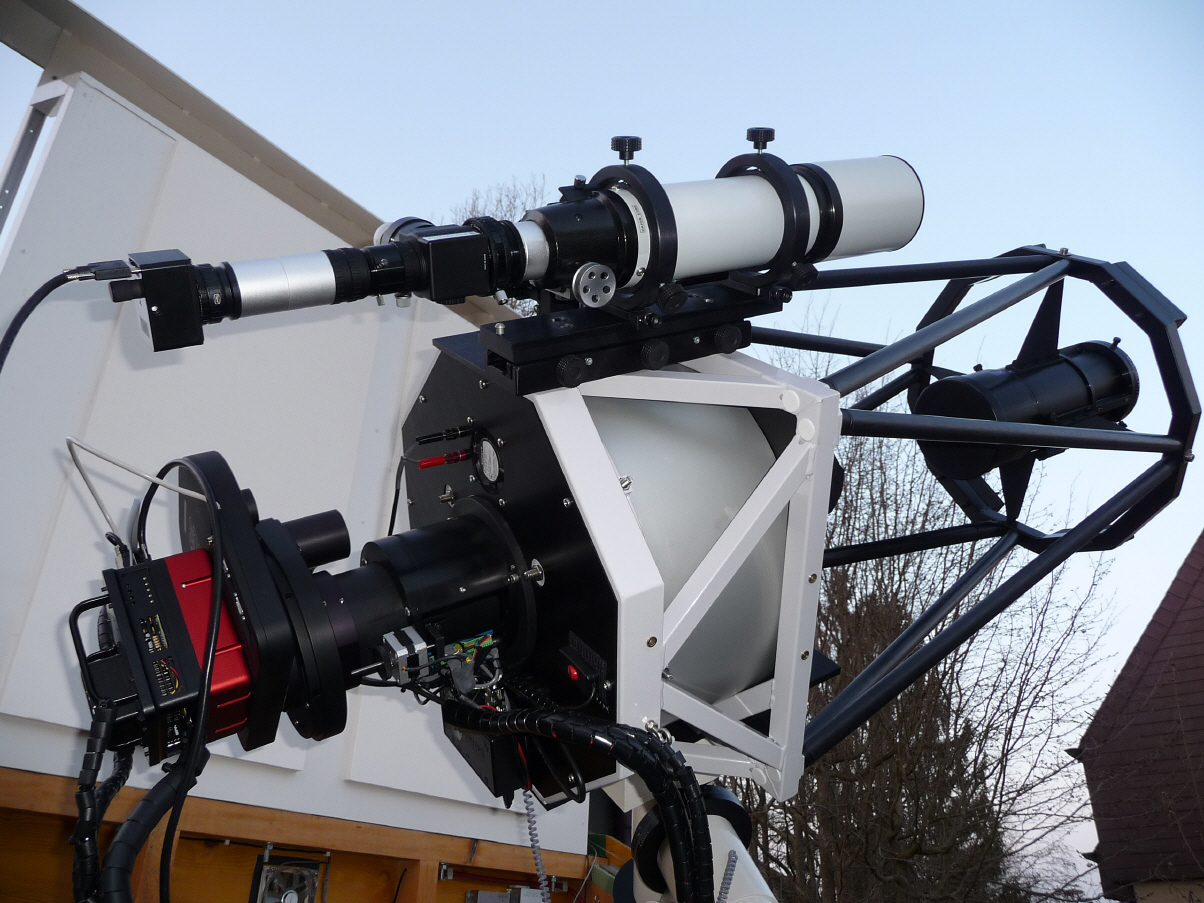
For the deepsky photography the ASA/Keller Cassegrain is normally combined with the ED80 refractor. The refractor is used, next to the internal autoguider of the STX16803, as an external autoguider and mounted on the back of the Cassegrain.
The external autoguiding Camera is a brand new SBIG STX version (same chip dimension and resolution as the internal STX guiding chip with 7.4u and a mechanical shutter for dark frames) and linked to the main Camera STX16803. It is bound to a TS-flipmirror and a modified/shortened ED80. The focal lenght of the guiding refractor ED80 with 600mm is efficient for perfect guiding.
The TS-flipmirror, together with an orion 12.5mm reticle eyepiece, is a helpful device to search at the sky for proper guidingstars at lower magnifications. It is adjusted parafocally to the CCD chip. So as soon a guiding star is found and properly focused, the switch of the flipmirror results on a perfectly focussed star on the guiding CCD chip.
----------------------------------------------------------------------------------------------------------------------------------
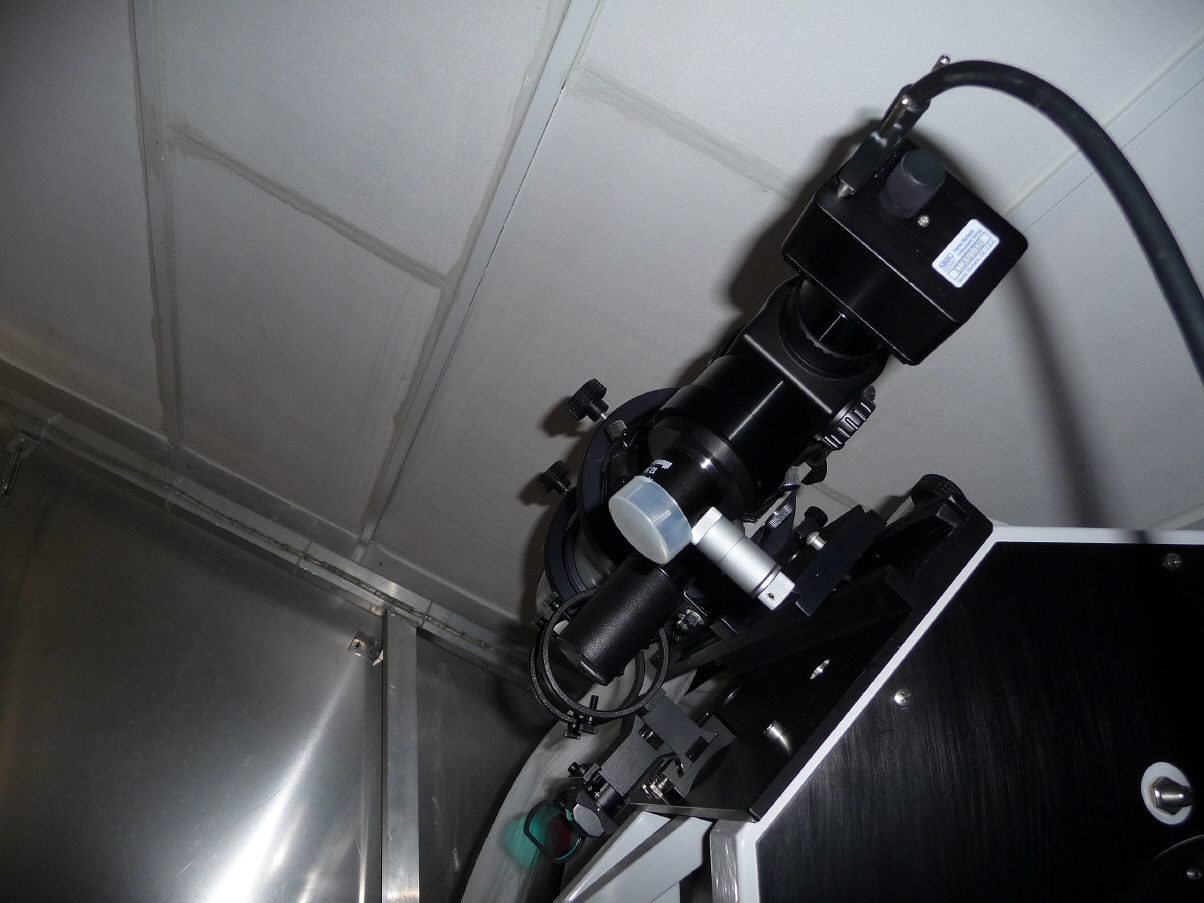
The external autoguiding Camera is a brand new SBIG STX version (same chip dimension and resolution as the internal STX guiding chip with 7.4u and a mechanical shutter for dark frames)
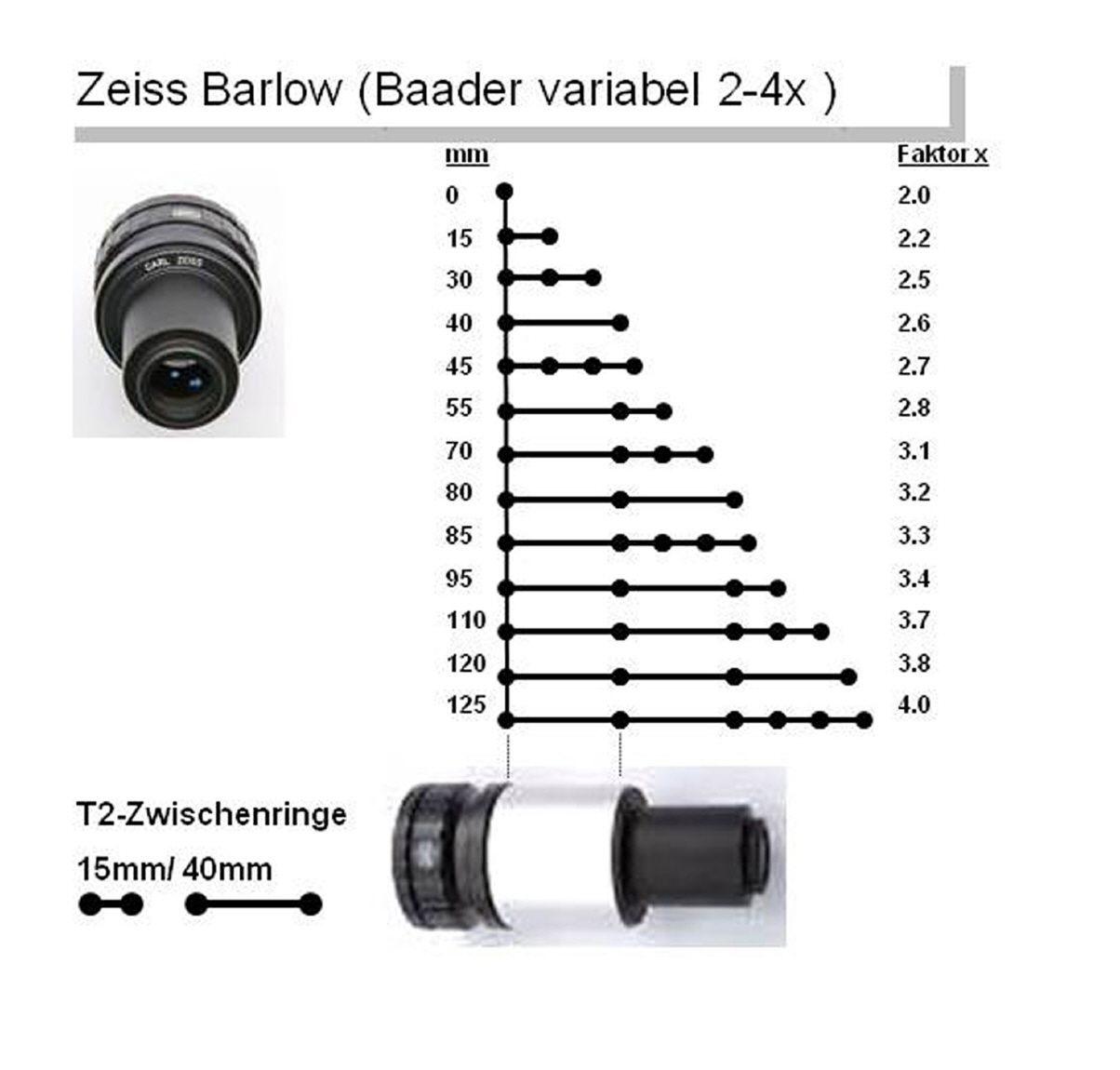
In order to power up the focal lenght of the autoguider a Zeiss Barlow may be used with an adjustable power factor, taking advantage of small spacer rings (each 15mm).
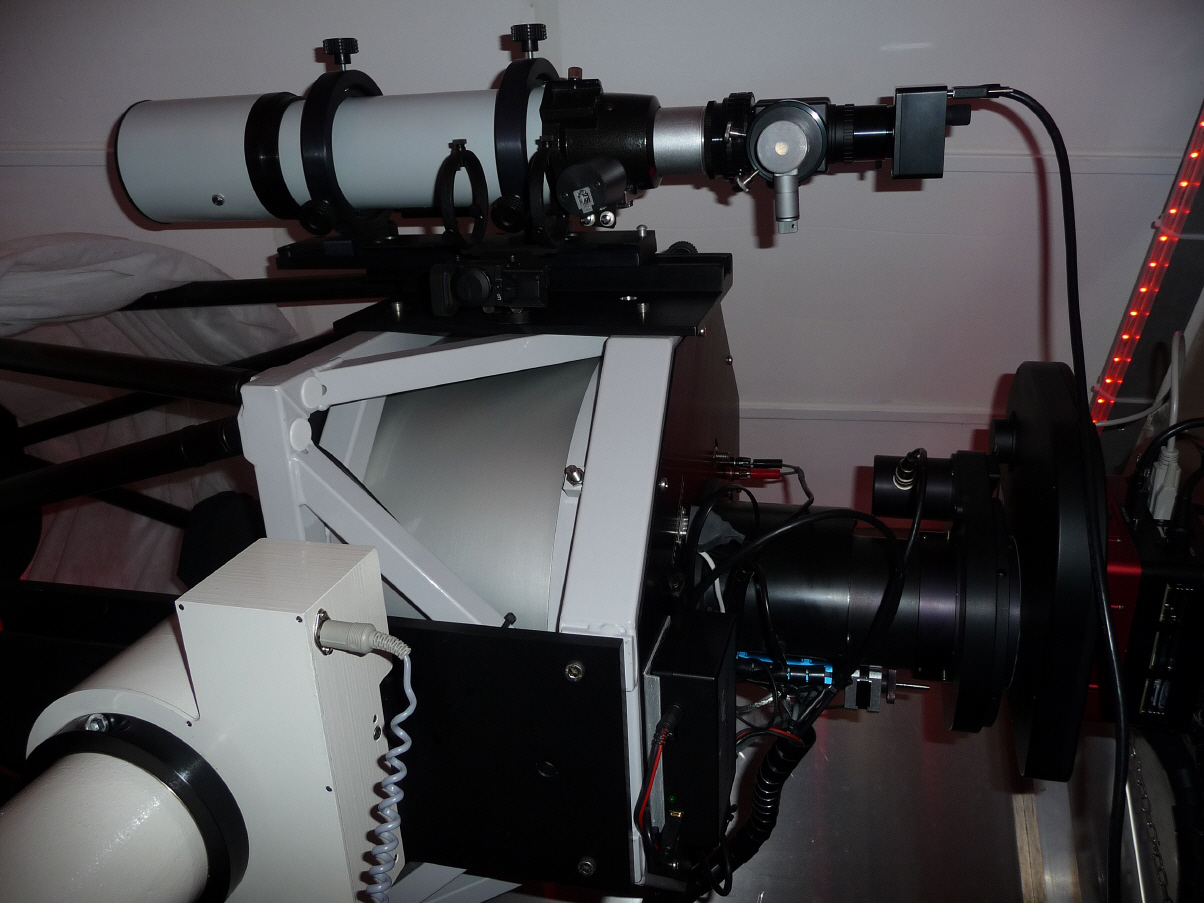
The ED80 obtained a TS-Laser finderscope, which makes with its wider view, the identification and selection of a potential guiding star much more comfortable.
The order of objectsearch is the following: Centering the star or planet in the TS Finder, the further centering in the 12.5mm eyepiece of the flipmirror, a mirror switch and the object is centered in the ED80/guidingcam at a focal lenght of 600 mm.
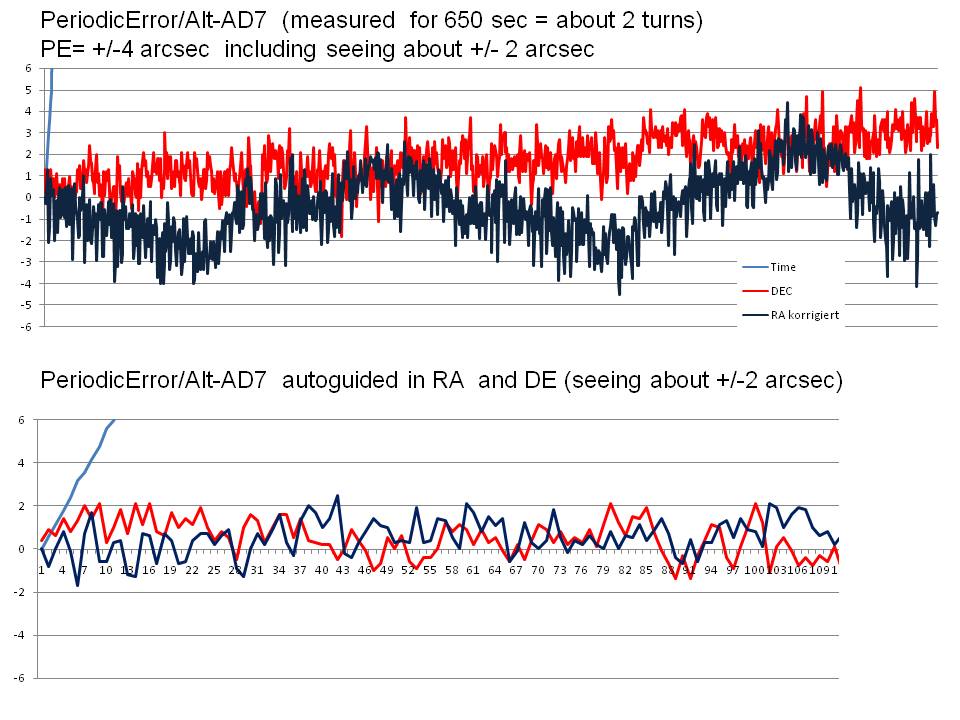
The tracking error of the Alt-AD7 is finally +/- (2-3) arcsec (without autoguiding).
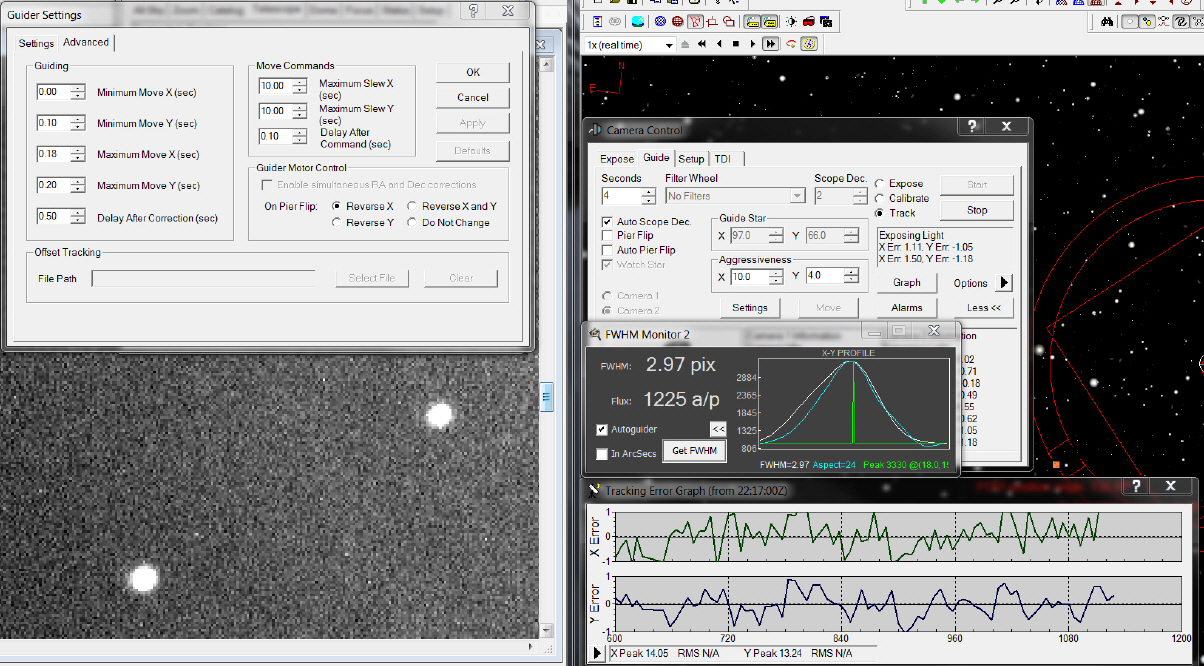
The MaximDL5 software autoguiding parameters:
o 0.25x guiding correction speed in RA
o RA and DEC corrections non linked!!! the LX200 protocoll was not capable to trigger both in parallel...now it works with an average less than 1 pixel on 90kg equipment...
o 2x2 Binning on guiding chip (with one autodark) at 4 sec exposures and 0.5 sec delay in between