Telescope and Mount
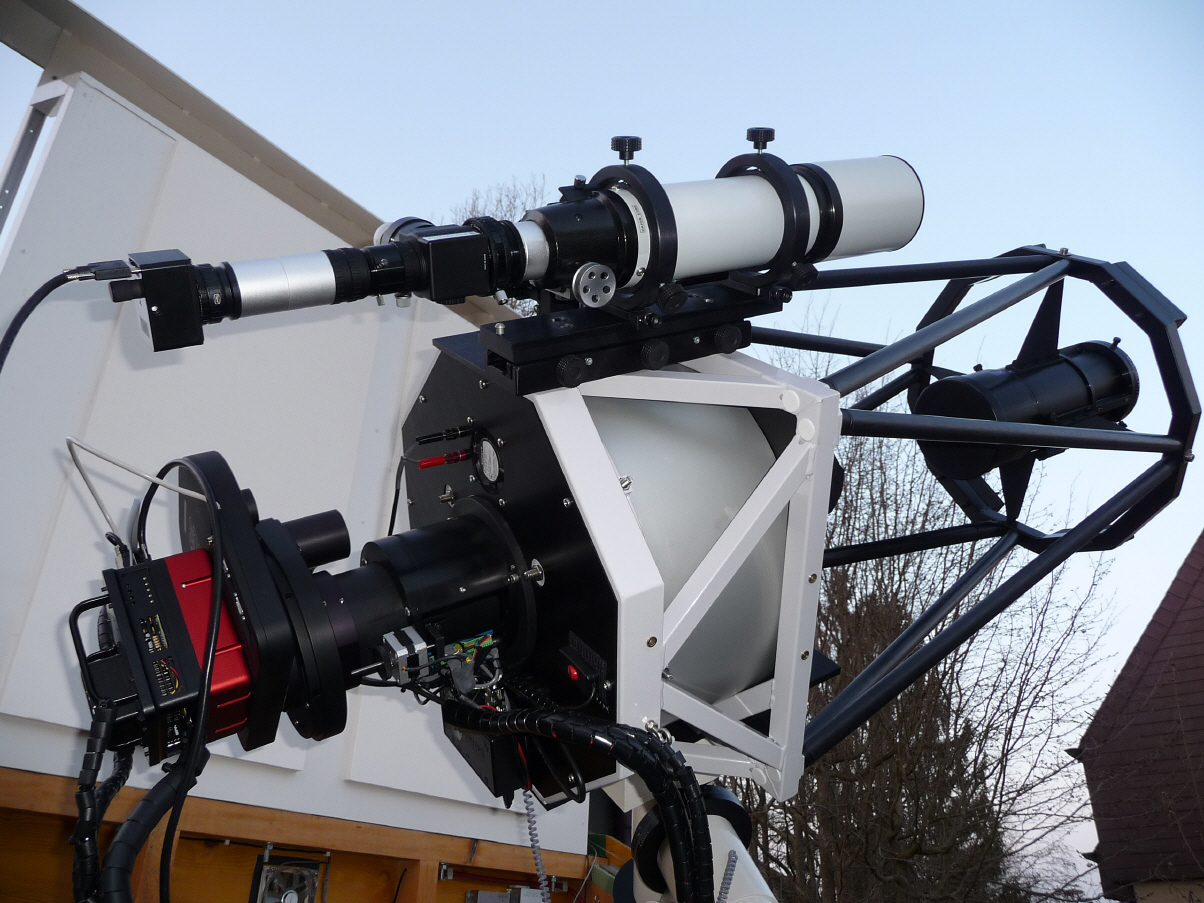
The new 'heart' of the Himmelwarte...
A Cassegrain LOMO 400mm f3/f9, which was made by Phillip Keller and ASA Austria here in a first version of their collaboration. It contains a corrector in primary focus and another replaceable corrector in secondary focus, all designed by P.Keller. They do not influence the focal lenghts in both variations.
A small TS finderscope and a ED80 for autoguiding are mounted on a solid adapter (made by Beat Kohler, AOK-Swiss) on the Alt-AD7 . A H-alpha sun telescope ED100 is used additionally from time to time and mounted on the back. The tube underneath is made of two concrete filled plastictubes (160/in and 300/ex) mm, placed in a one cubicmeter basement and mechanically isolated from the wooden floor.
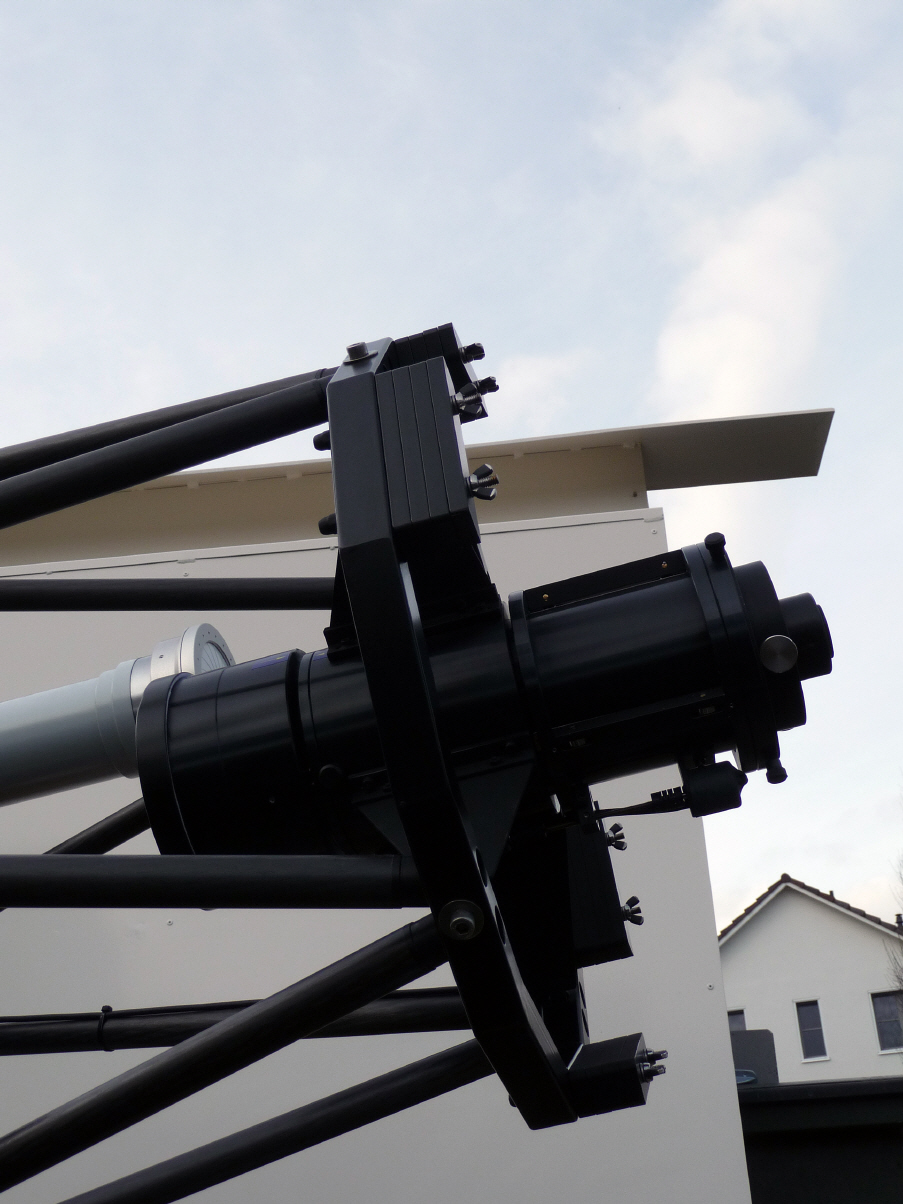
The innovative counterweights at the top are made and kindly provided by ASA Austria getting my Cassegrain in the small obervatory in balance. On top is the flat 2 Zoll adapter visible, which facilitates the binding of the ST10XME in prime focus f3 at 1200mm focal lenght.
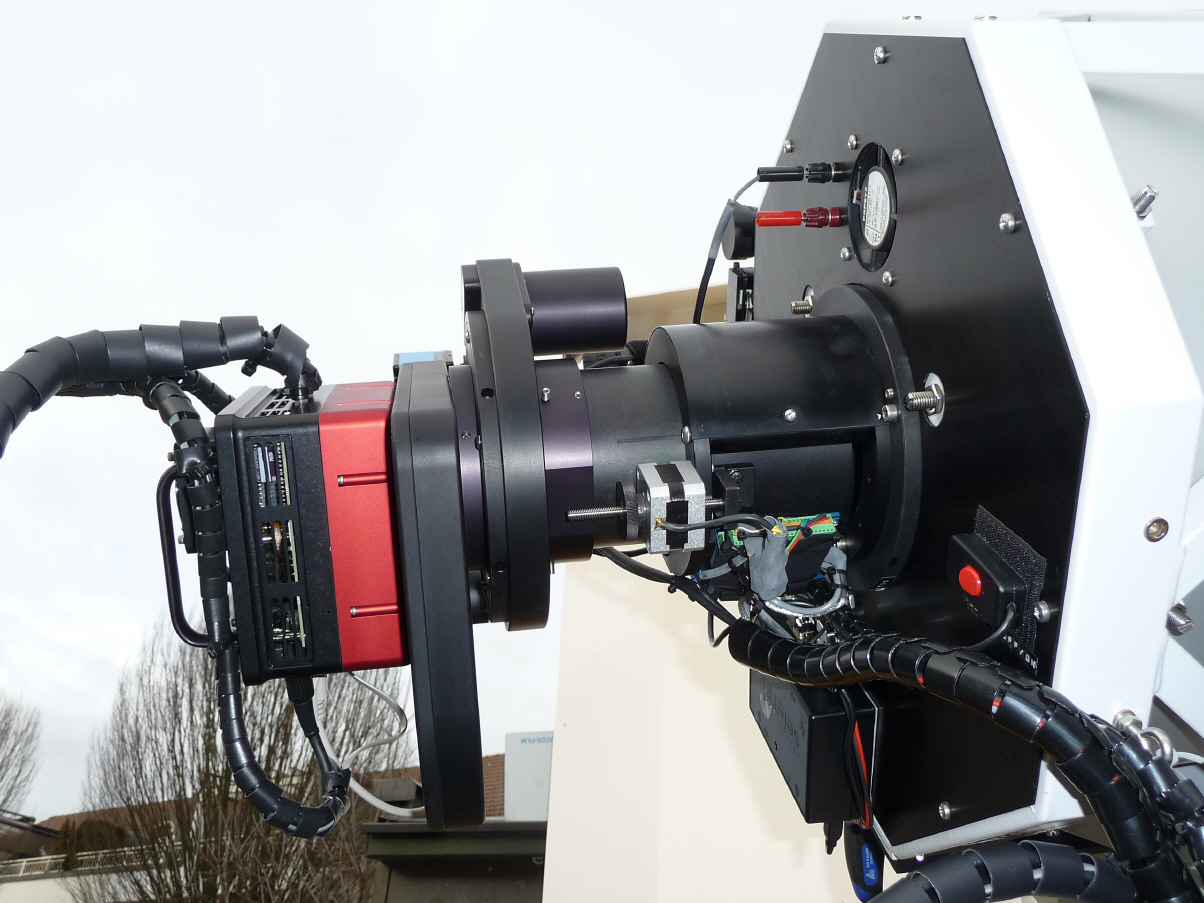
The view from the back...
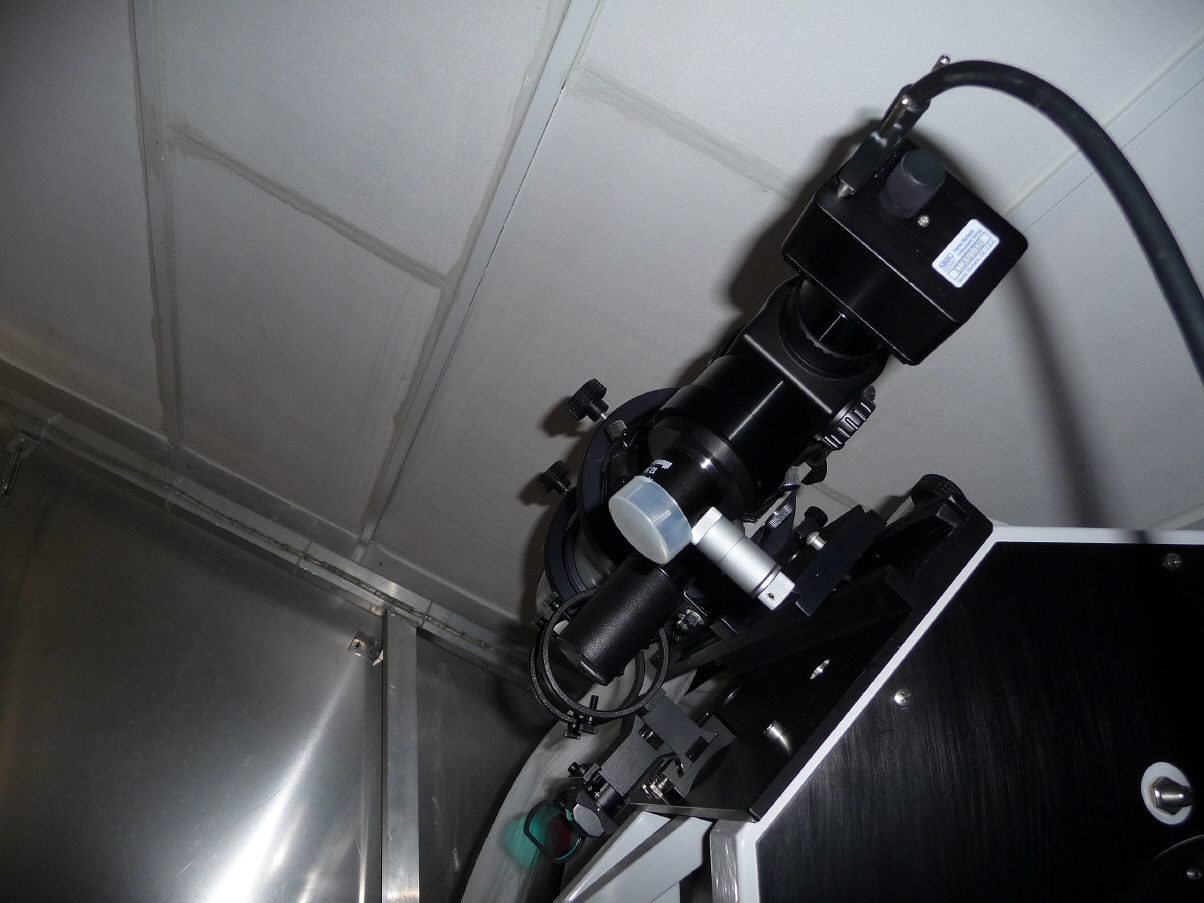
A TS laserfinder enables the search for visible stars. It is used to synchronize the cassegrain (with f9 and 3600mm focal lenght) pointing to the sky with the software TheSky6.
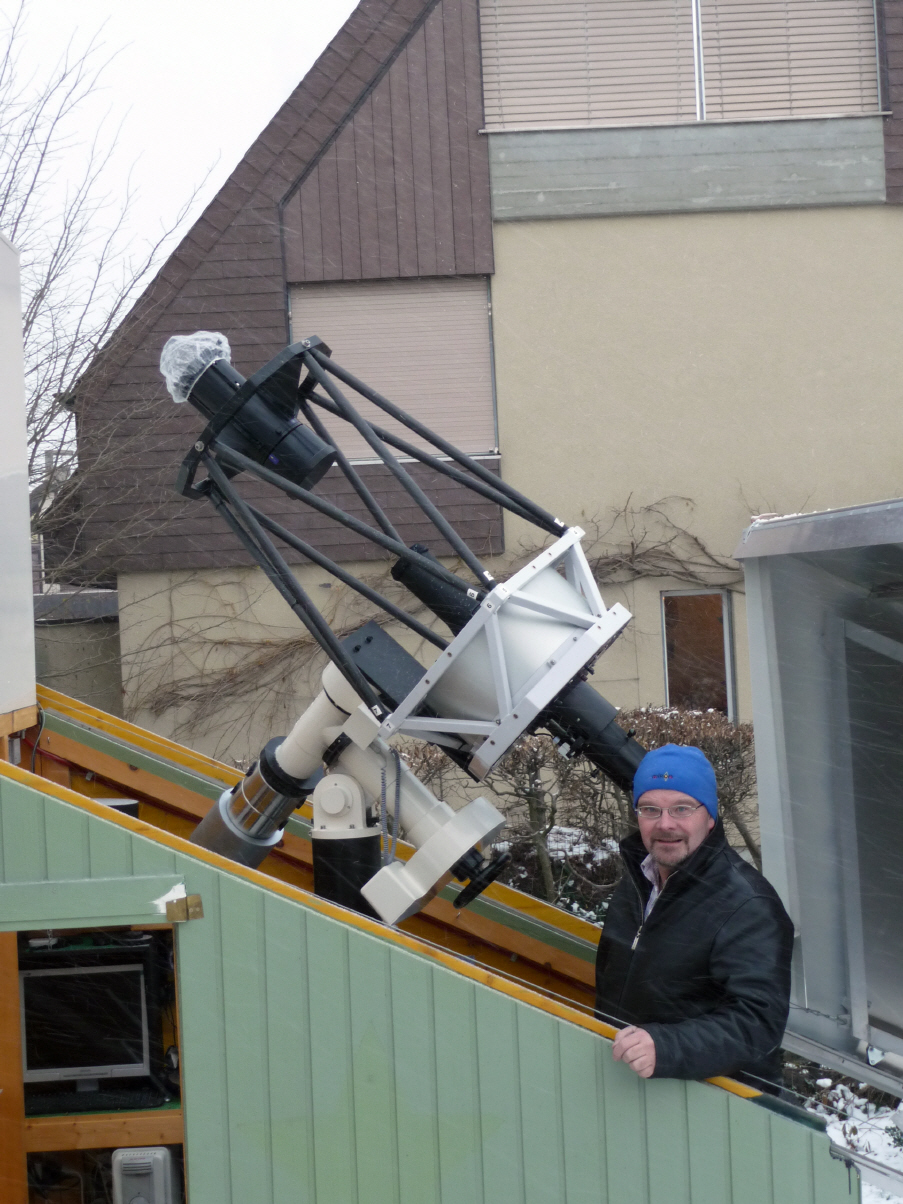
Thank's Mirco (ASA Austria) for your kind help... not only at the day of delivery ;-)
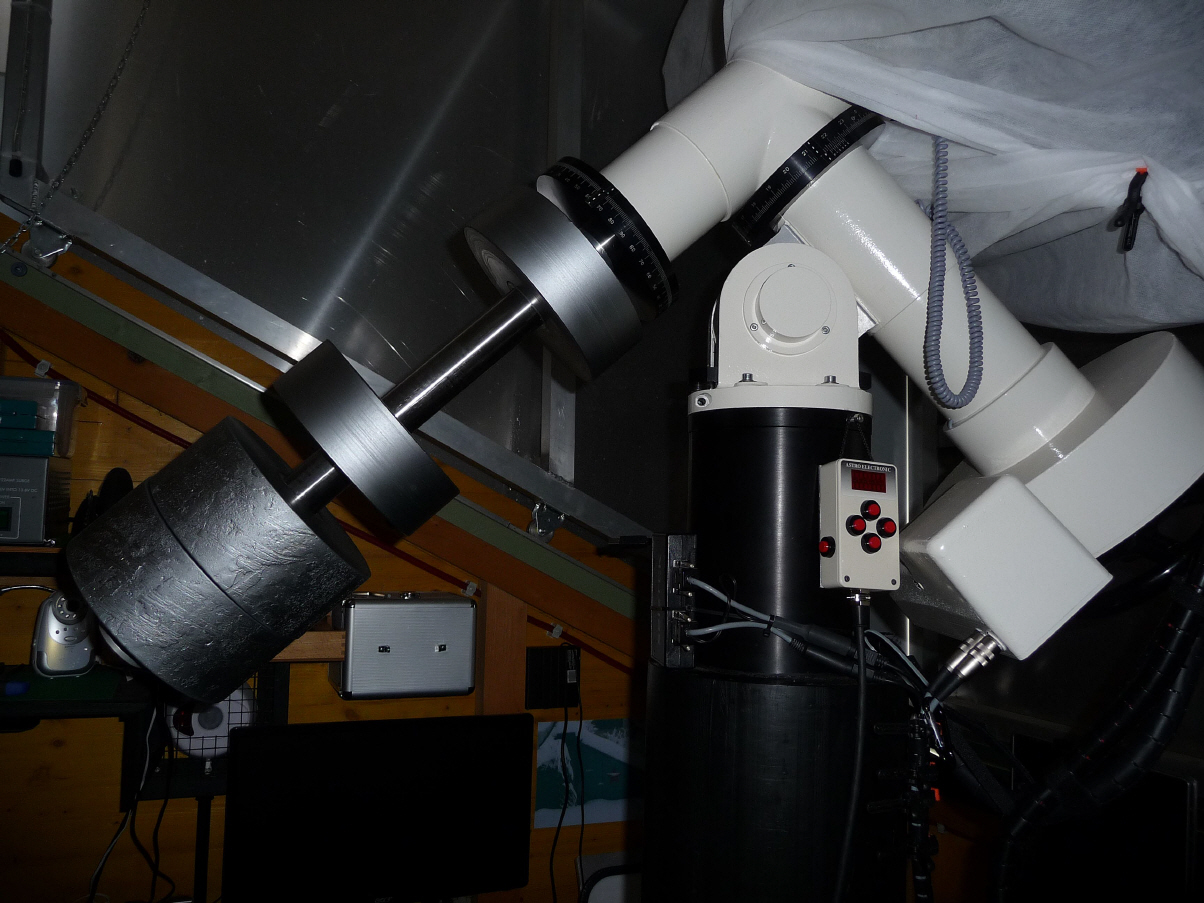
The counterweight consist of several weights of 21kg, 21kg, 15kg, 15kg and a 7kg heavy rod/55cm (Alt-AD7). The overall weight is in balance 79kg and is adjustable in order to adapt the various exchanges of the STX, the ED60 Guidersetup, the ED100 Setup with solarfilters, respectively the planet projection units at the telescope.

The 65 kg Cassegrain, the 7kg ED100 and the 160kg Alt-AD7 Mount (including counterweights) needed a longer modified pillar. The diameter of the concrete tube is 300mm and at the top 160mm (this smaller part is 250mm in lenght, measured from the adapter plate and the upper part is filled with fine sand).
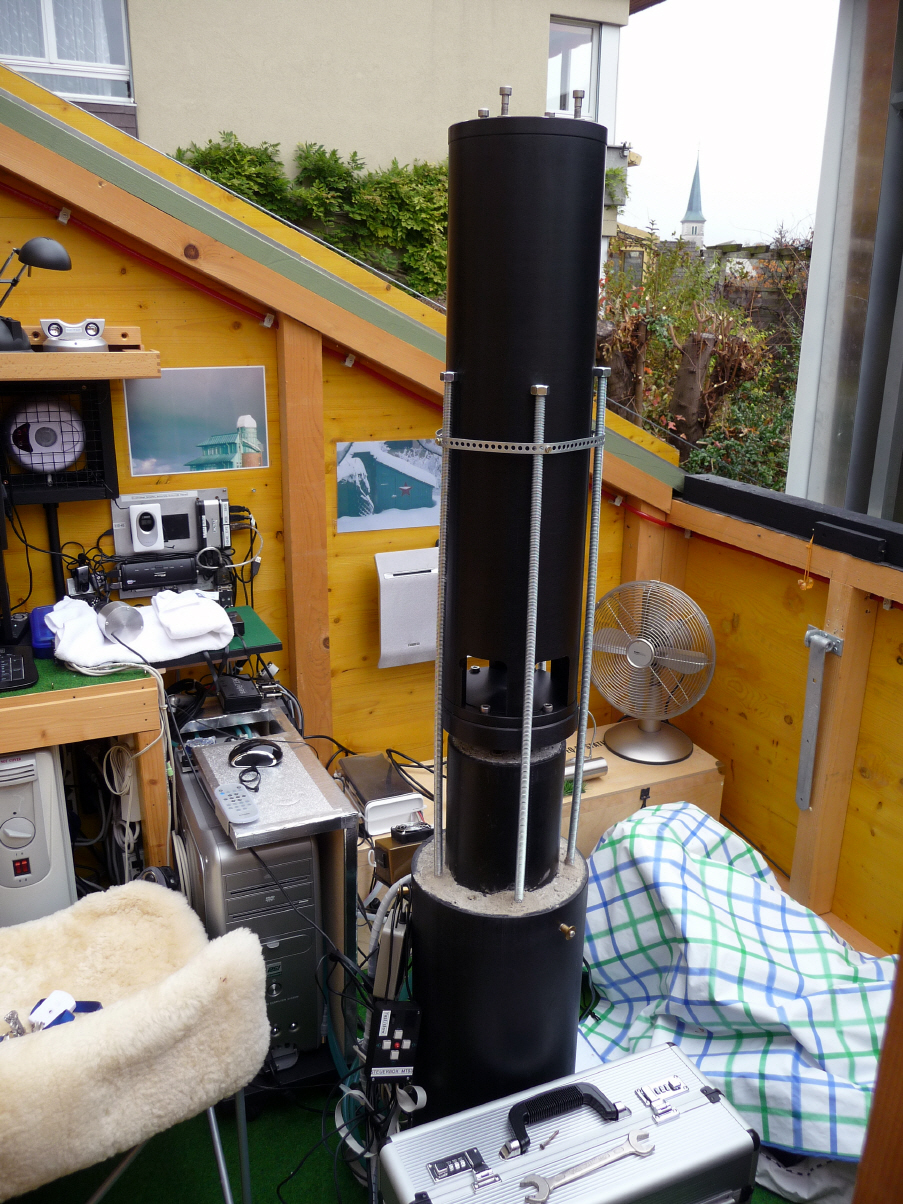
The pillar in raw format. The old one was extended by a 70cm adapter, made by Beat Kohler AOK Swiss. All was later embedded in sheated concrete and a black plastic tube of 70cm lenght.

The second setup of Himmelwarte, the telescope Intes MN61 together with the small guiding scope ED80 and the halpha sun telescope ED100 all together mounted on a solid adapter (made by Beat Kohler, AOK-Swiss) on the Alt-AD7 (here shown mounted on the former short pillar).
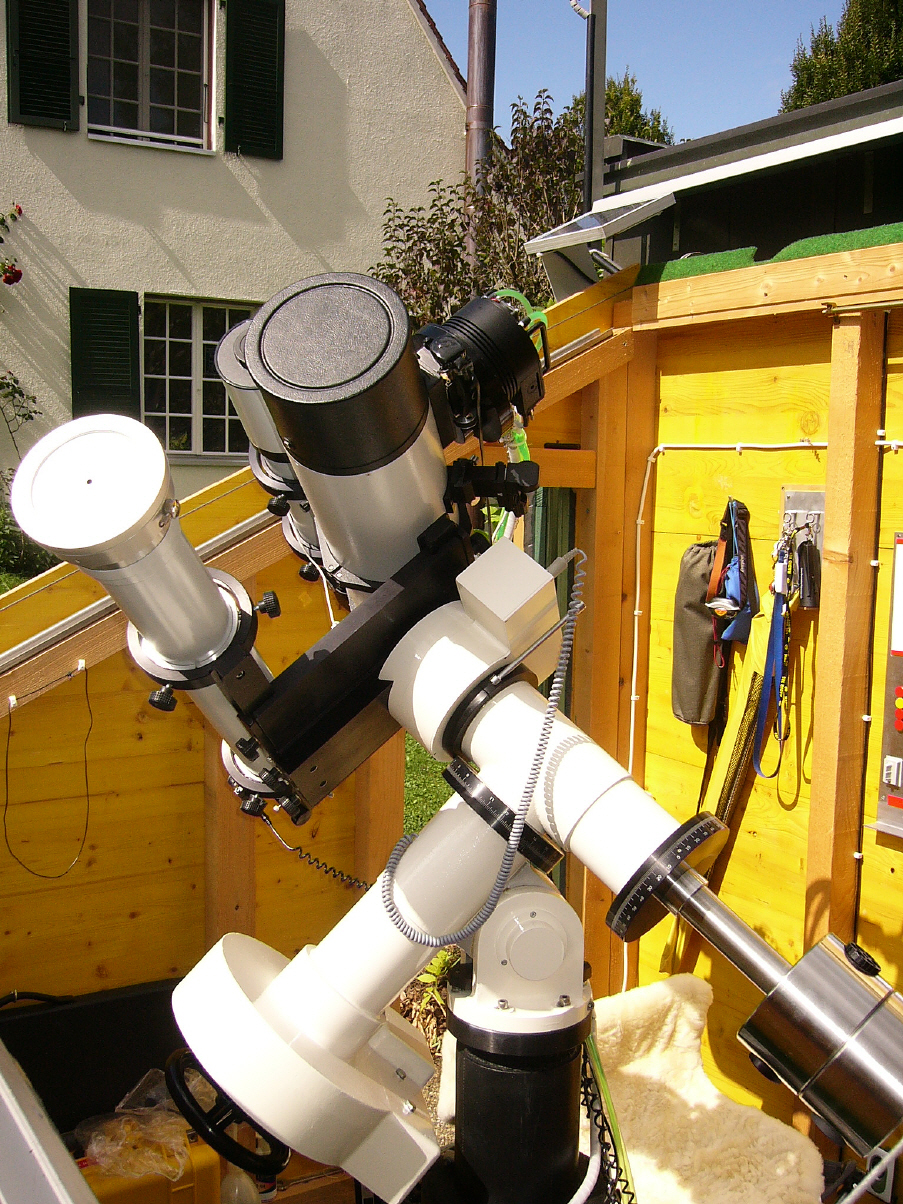
The second setup from the front...
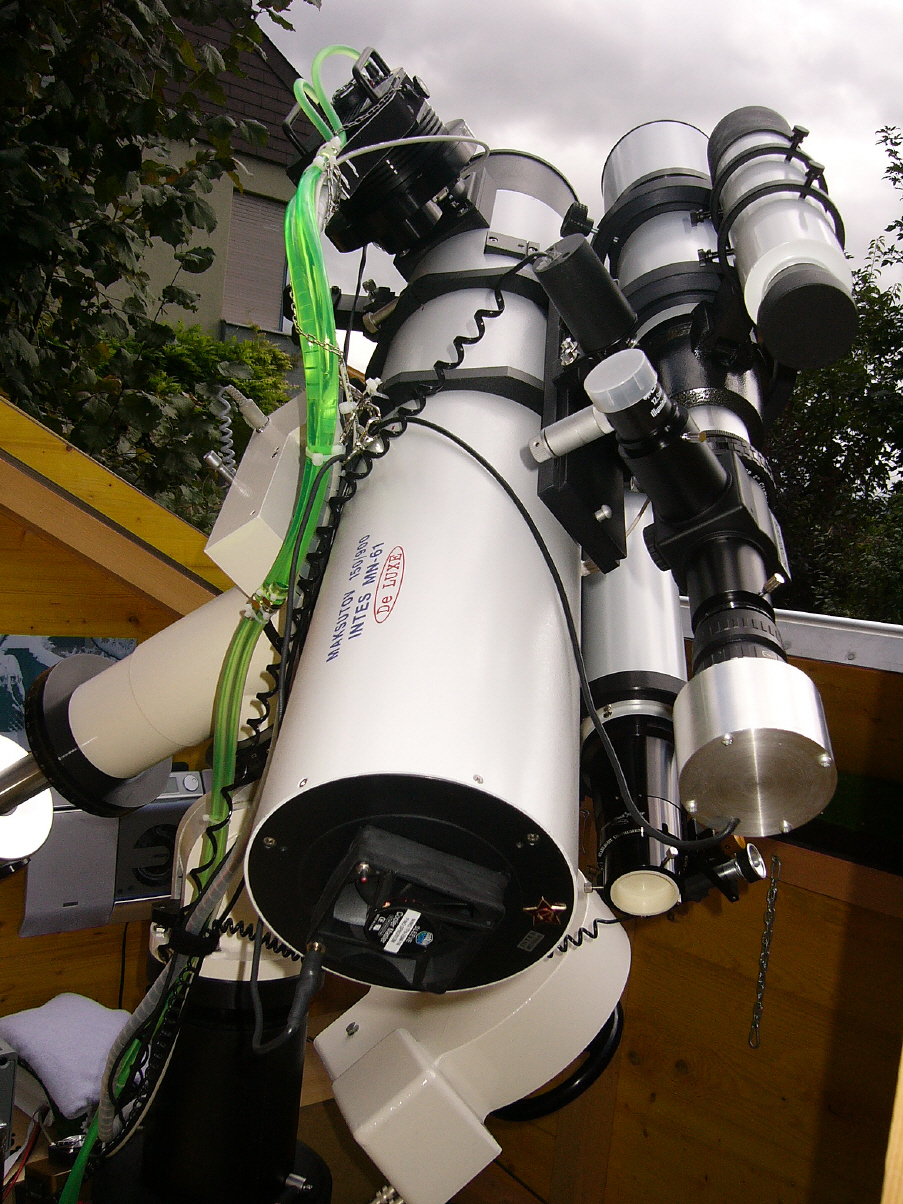
... and here from the back. A small fan was mounted to the back of the mirror cell, which is controlled by a adjustable timer. It sucks the air from inside and blows it outside. In order to prevent the collection of dust by this thermal equilibration procedure, the air is filtered by a small selfmade filter (filmcan/plasticwool) placed in the NGF-DX1 focuser.
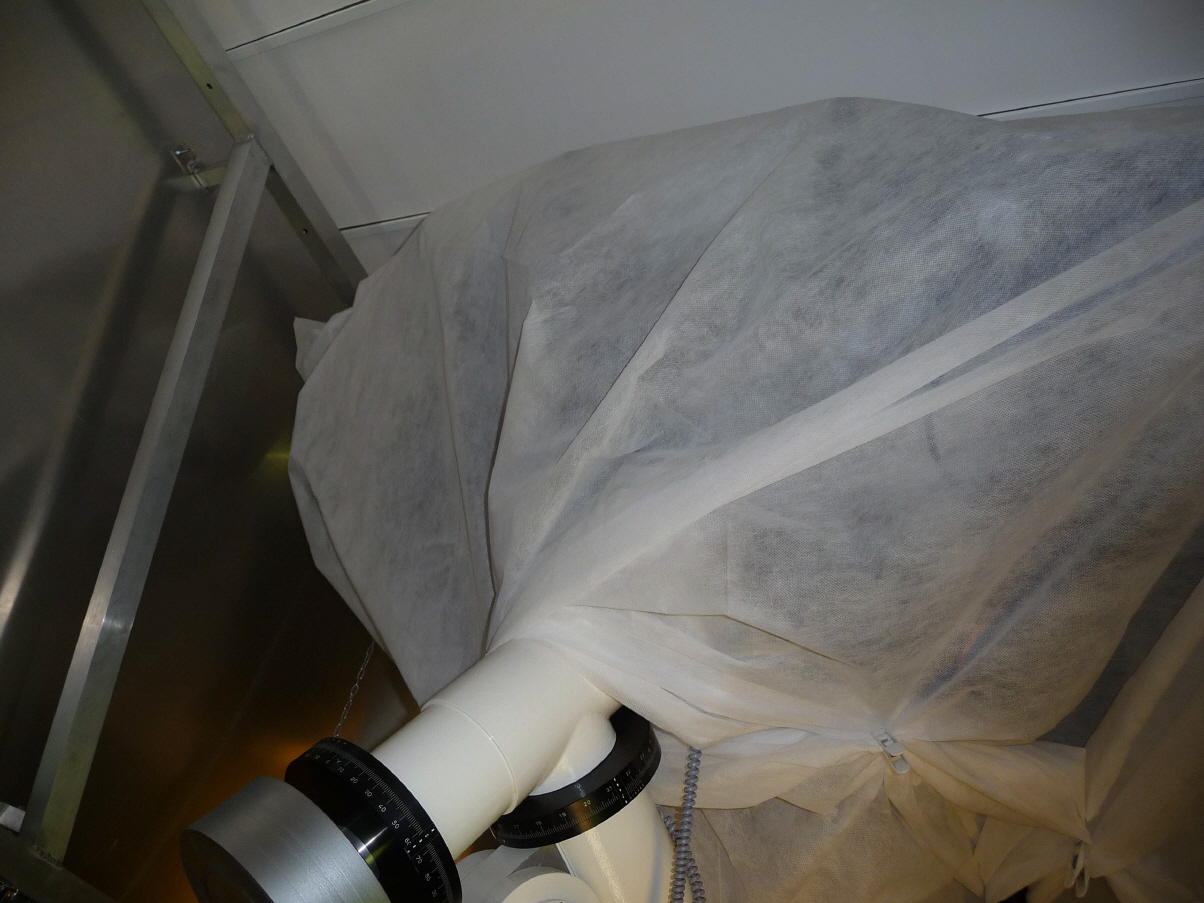
This garden meshwork, applied during longer observation pauses, keeps water, ice, flys and bugs away ;-)