Watercooling SBIG-CCD Camera
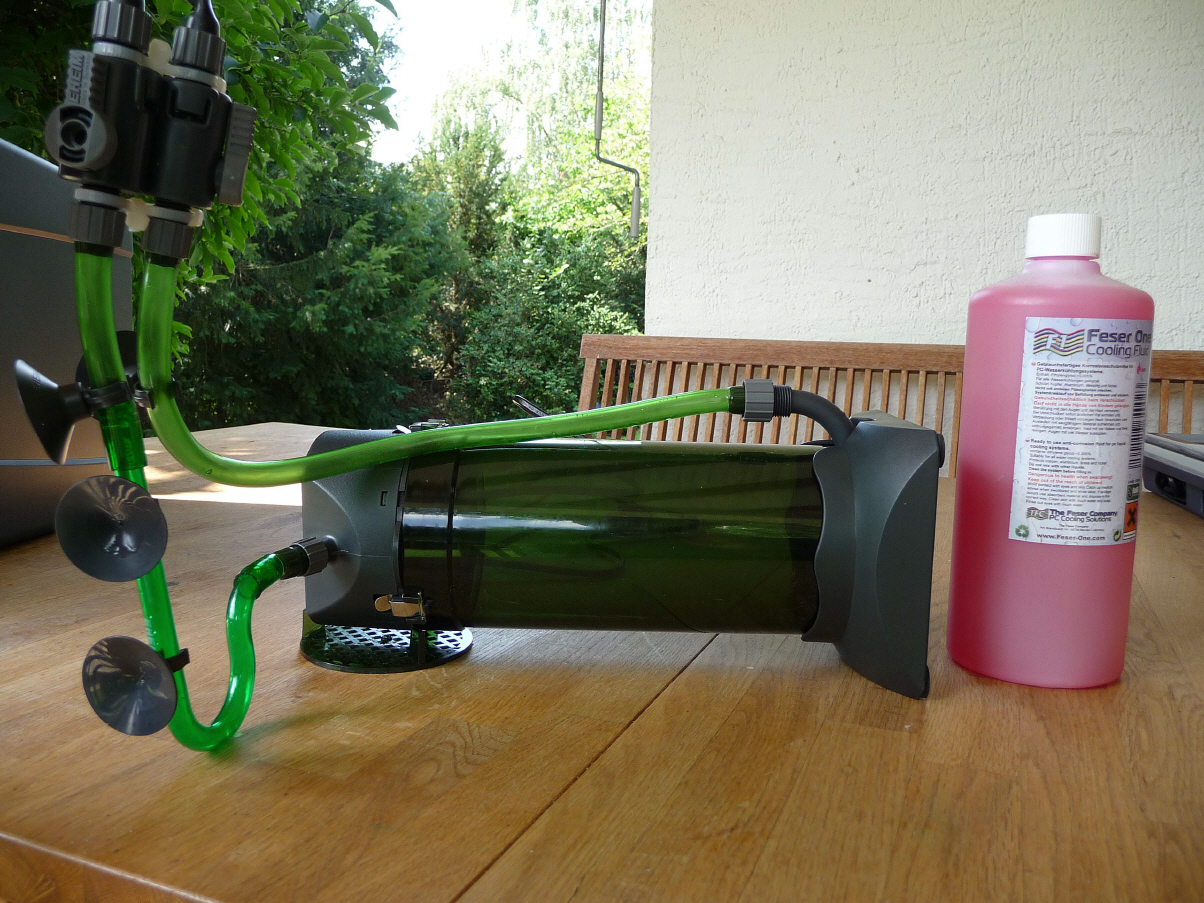
In order to improve the cooling of the cameras ST10-XME or STX16803, especially at warm summer nights, a watercooling system was installed based on a closed aqua filterpump and a camping coolbox.
The liquid removes the heat (much more efficiently than air), which is accumulated in the SBIG cooling system/camera unit. An enforced chilling i.e. by ice is not recommended due to the possible condensation of water, out of humid air, at the night time. It may be generated at the tubing or even in the proximity of the electronics highly likely causing circuit damage.
As shown on the picture, an Eheim waterpump is linked to a 1 liter reservoir, which contains a colorized cooling liquid normally used in cars for their watercooling system (Eheim doesn't recommend this kind of usage, so it is up to you and your own responsebility to run such a setup). Be careful with the antifreezing liquid, it may contain the chemical ethylenglycol, which is harmeful not only for the human being. Wear gloves if you handle it and don't ingest it. I added a few milligrams of cupper-sulfat to the solution in order to prevent the growing of bugs and fungi in this cooling liquid, exspecially during the warm summertime.
The setup resultes in a drop of temperature in the cooling liquid of 4-5 degrees compared to the ambient one, measured in the non-isolated tubing, which will lead finally to an additional reduction of noise in the images. The cooling is so efficient that the fan in the STX16803 can be switched off... this leads to absolute silence in my observatory...
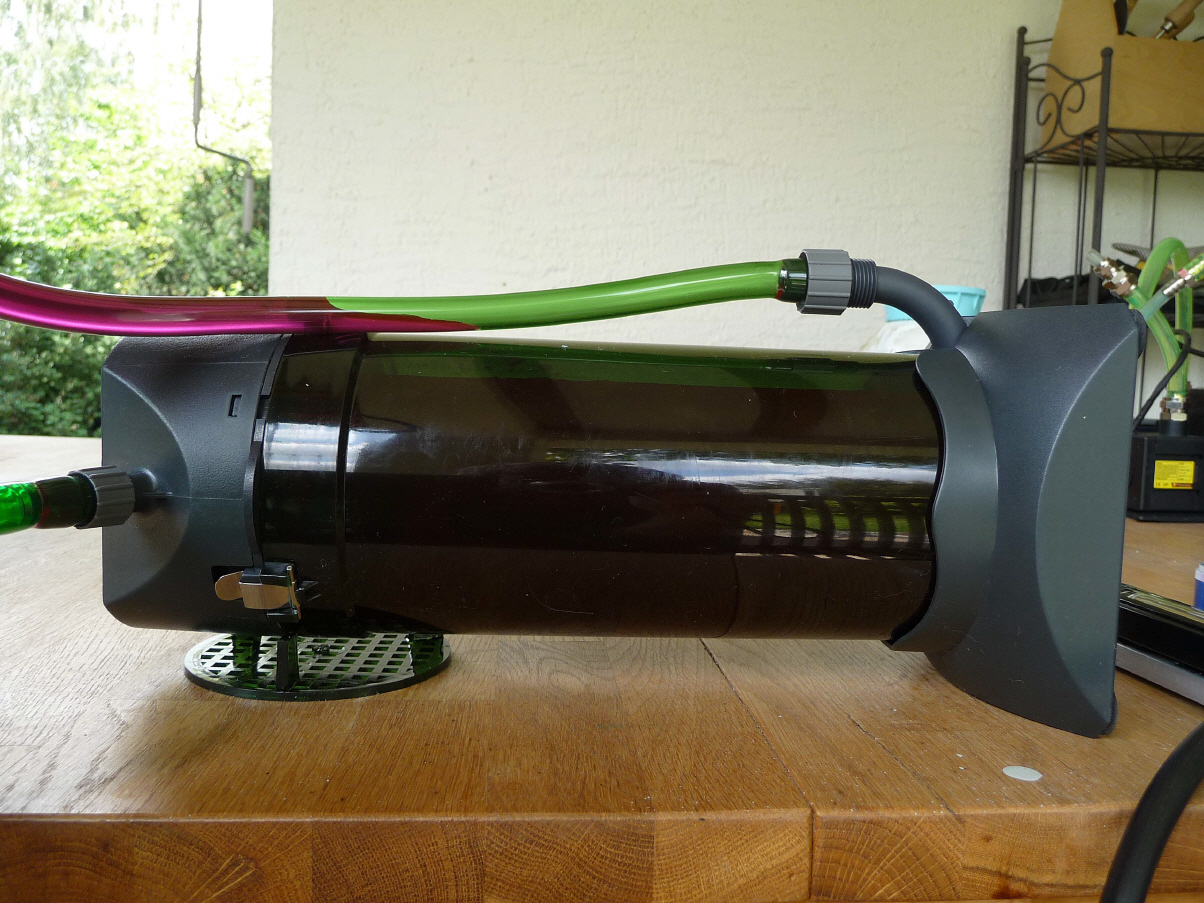
In order to allow the circulation of liquid in this closed circle of tubing. I laid the filter down to its side and leaved an air level of about two centimeter on top, just by filling the filter to only about 90% with liquid. The pump (left side) is under water, transporting the liquid out of the filter. The incoming tubing (right side) is entering the top on the filter reservior.

The camping coolbox is driven by 220V or 12V. It contains peltier elements, which are cooling inside and heating outside. The cooling air flow is circulating inside of the box and the heat is transported away at the outside by an electric fan.The cooling airflow inside cools the liquid in the filtersetup, which is constantly transferred through the box by the tubing linked to the camera.
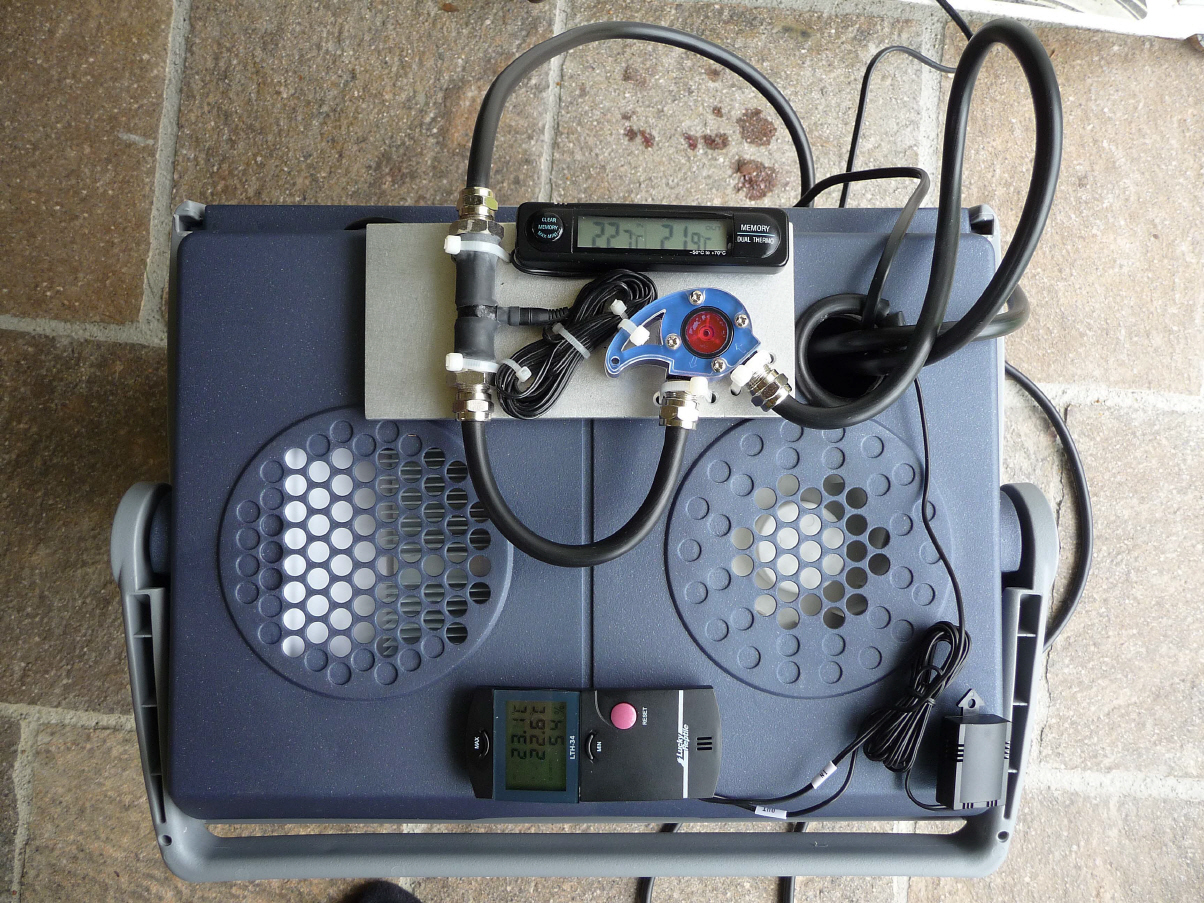
The flow of cooling liquid is monitored by a small water wheel, linked into the tubing, which connects the cooling unit to the SBIG camera at the telescope.
A selfmade thermosensor unit (aquaristic tool) was also integrated and enables the realtime monitoring of the external room temperature and especially the internal cooling liquid temperature, which leaves the filter and passes the sensor on the way to the camera (right side of the picture).
A second temperature sensor measures the temperature inside of the coolbox and outside the huminity as well the ambient temperature. I read these data to control the dew point which could lead to condensation of water at the tubing and camera.
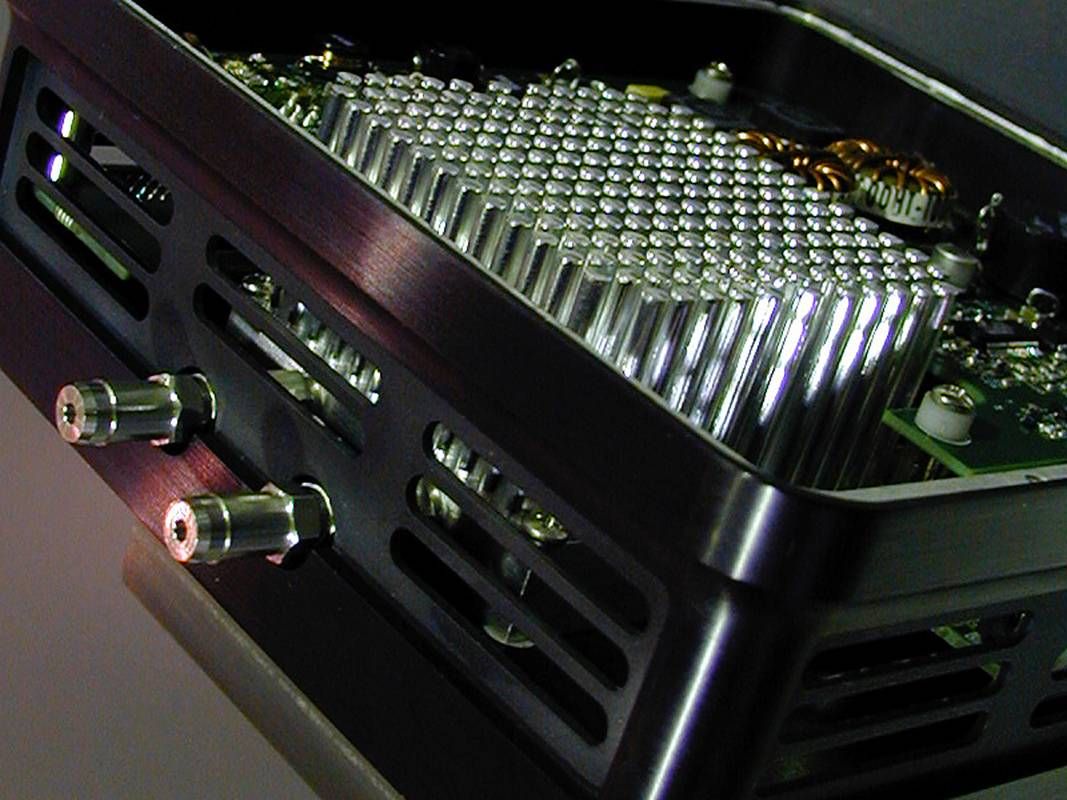
The tubings are directly linked to the STX16803 (photo a courtesy by SBIG)
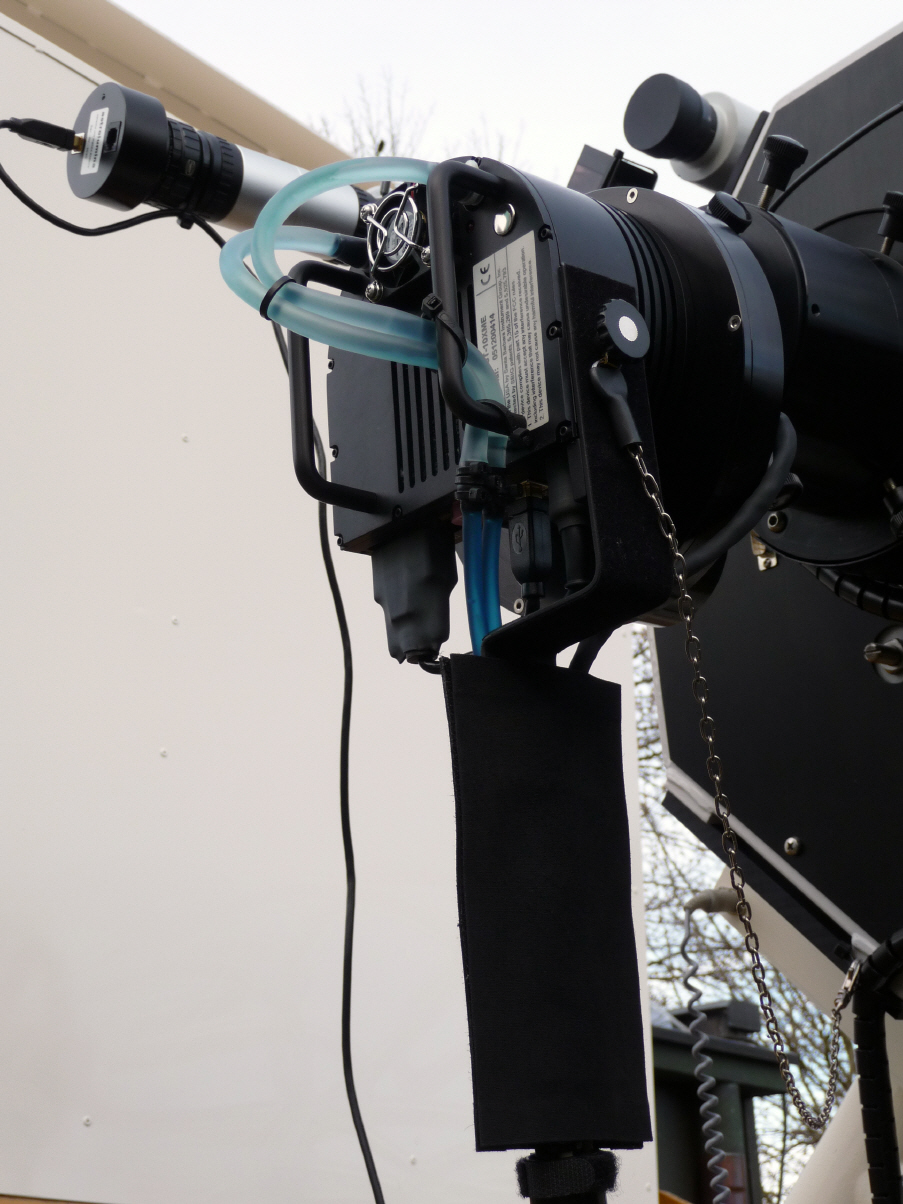
The cables and waterpipes are arranged on a slim aluminium support at the ST10XME in order to keep the obstruction in f3 prime focus at minimum. A matt piece of fabric is arranged around the support to prevent possible reflexions in the light path of the f3 arrangement.